
How to integrate sign language into teaching for children with little or no verbal language
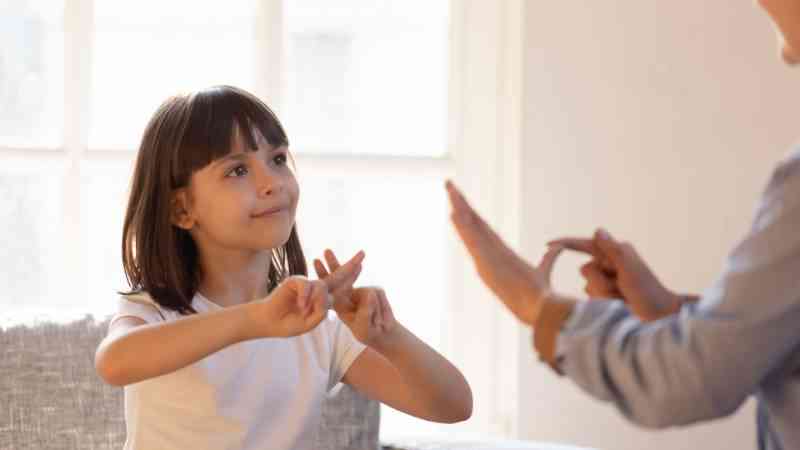
Communication is a fundamental need for all children, but some, especially those with language difficulties, may need additional support to express themselves. One of the most effective tools to support communication in children with little or no verbal language is sign language .
Integrating sign language into teaching not only improves interaction, but also reduces frustration, supports language development, and strengthens connections with others. Below, we share practical strategies for incorporating sign language at home, in therapy, or in the classroom.
✋ 1. Why use sign language for children with communication difficulties?
Sign language is not just for deaf people; it is also an excellent support tool for children with difficulties in verbal expression. Its main benefits include:
✔️ Facilitates early communication : Children can learn to use signs before developing speech, which reduces frustration and improves interaction.
✔️ Promotes the development of oral language : Signs reinforce the association between gestures and words, facilitating the learning of speech in children with language delays.
✔️ Supports language comprehension and structuring : Gestures help give visual and motor meaning to words, which improves memory and retention of concepts.
✔️ Reduces anxiety and behavioral problems : By having a tool to express themselves, children feel understood and regulate their emotions better.
🎯 2. Strategies for integrating sign language into teaching
Start with keywords and everyday contexts
You don't need to learn a whole sign language right away. Start with key words and everyday situations like:
✔️ Basic needs : "eat", "water", "bathroom", "more", "help".
✔️ Emotions : "happy", "sad", "angry", "scared".
✔️ Objects and people nearby : "mom", "dad", "toy", "ball".
👉 In the VICON Method, we have music videos where we work on these keywords through music and rhythm.
Many of our songs are designed to convey emotions in a natural way: some with cheerful melodies that encourage imitation and participation, and others with softer melodies that help children identify with the messages and make their learning more bearable.
Always accompany the signs with the spoken word
In order for children to make the connection between gesture and verbal meaning, it is important that signs are accompanied by spoken words. This reinforces learning and encourages the development of oral language.
✔️ Say the word at the same time as you make the sign.
✔️ Use expressive gestures and eye contact to reinforce communication.
✔️ Repeat frequently in different situations to reinforce the association.
Make it fun with songs and games
Learning is most effective when it is done in a playful way. Some ideas include:
✔️ Sign Language : Accompanying children's songs with gestures helps reinforce meaning and imitation.
✔️ Imitation games : Games like "Simon says" or mirror activities with signs help strengthen motor memory and language.
✔️ Sign language : Incorporating gestures into storytelling improves children's understanding and participation.
👉 In VICON Method videos, we include imitation games with signs that encourage communication and language learning. In addition, our songs are structured to reinforce rhythm, repetition, and emotional connection with children, making teaching sign language more intuitive and effective.
Use visual aids to reinforce learning
Pictures and pictograms can help children associate signs with words more easily. You can use:
✔️ Posters with images and basic signs at home or in the classroom.
✔️ Visual cards with pictograms and gestures.
✔️ Educational apps or videos with sign language.
Integrate the use of signs into your daily routine
The key to helping children learn to sign functionally is to include them in everyday activities:
✔️ During mealtimes ("I want more", "I'm done").
✔️ During playtime ("let's go", "play", "friend").
✔️ To express emotions and needs ("happy", "help", "hug").
👉 Within the VICON Method, we have step-by-step strategies for children to integrate sign language into their daily routines. Through our videos and interactive dynamics, families and professionals can apply these tools in a simple and natural way.
Sign language is a powerful tool to help children with little or no language communicate effectively, reducing frustration and strengthening their development. Its integration at home, in therapy and at school can make a big difference in their lives.
If you are not yet part of our community, you can access the VICON Method program for free for 7 days , where you will find music videos, imitation games and practical strategies to stimulate communication in children .
🔹 Would you like to learn more about how to integrate sign language? Leave us your comment or share this article with whoever needs it. 😊
Leave a reply
Leave a reply Your email address will not be published. Required fields are marked with *
